
Japanese Import Specialist

Nissan Elgrand Insurance

– Imports, Day Vans & Conversions

Japanese Import Specialist

Nissan Elgrand Insurance

– Imports, Day Vans & Conversions

Compare Nissan Elgrand insurance from specialist UK brokers. The Elgrand was built for the Japanese domestic market and never sold new here, so every one on UK roads is an import. Whether yours is standard, a day van or a full camper conversion, we help you find cover from brokers who handle imports and declared conversions.

Get Nissan Elgrand Insurance Quotes

Specialist cover for imports and conversions

E50, E51 and E52 Elgrands covered
Day vans & camper conversions
Multiple competitive quotes

Quotes provided by a panel of specialist insurers.

Get Elgrand Quotes →
FCA regulated providers Partnered with Adrian Flux OneClickInsure have partnered with Adrian Flux to help you obtain import and specialist vehicle insurance. Adrian Flux Insurance Services Group is authorised and regulated by the Financial Conduct Authority (FRN 307071). Registered office: East Winch Hall, East Winch, King's Lynn, Norfolk, PE32 1HN. OneClickInsure may receive a commission if you buy a policy through Adrian Flux. This does not affect the price you pay.
FCA regulated providers
Imports & conversions
No obligation to buy

Nissan Elgrand Insurance Guide

In the past, getting insurance for an import such as the Nissan Elgrand was difficult, and a mainstream provider would quote silly prices. That has now changed with a growing number of brokers specialising in providing insurance for the imported vehicle market. The Nissan Elgrand is a minivan or an MPV manufactured in Japan since 1997 under 3 variants E50 (1997–2002), E51 (2002–2010), and E52 (2010–2020). The E51 is without a doubt the most sought after model, with many converting them to a small campervan. Similar to the Mazda Bongo, you will find forums and clubs devoted to the Nissan Elgrand.
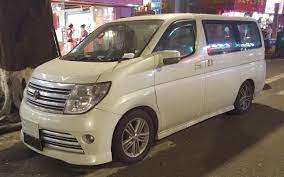
Nissan Elgrand imported Japanese MPV, commonly converted to a day van or campervan in the UK

Registering an import in the UK

If you are bringing an Elgrand in yourself rather than buying one already here, it has to be registered with DVLA before you can insure and use it on the road. The process is set out in the gov.uk guidance on importing vehicles into the UK. Until the registration comes through you will be quoting on a chassis or VIN number rather than a plate, which narrows the panel considerably.

Which Elgrand Generation Do You Have?

Insurers treat the three generations differently, and so does the conversion market. Knowing which one you own makes the quote process quicker.

Generation Years Engines Notes
E50 1997 to 2002 3.0 diesel, 3.3 petrol V6 The original, now the oldest on UK roads. Rear wheel drive layout and a boxier shape. Often the cheapest way into Elgrand ownership, though parts take more finding.
E51 2002 to 2010 2.5 and 3.5 petrol V6 The one most owners want, and the one most often converted into a day van or camper. Highway Star trim is the specification people ask for by name.
E52 2010 to 2020 2.5 and 3.5 petrol V6 Front wheel drive and a lower floor, which changes what is practical in a conversion. The newest of the three, so values and repair costs sit higher.

Availability and premium depend on the individual vehicle, its condition and any modifications, subject to eligibility and underwriting.

Benefits of Owning an Imported Elgrand

The Japanese car market is ultra competitive, and it is common to fit out models with a host of extras to increase sales. These extras add a touch of luxury that is not available in standard minivans unless you spend heaps more on options. With an import, you are getting these as part of the standard package.

Luxury minivan, perfect for larger families
Class and presence on the road
Drives like a car, 3.5 litre V6
Ideal base for a DIY campervan or day van
Seven and eight seat layouts as standard
Active owners clubs and forums

Ways to Reduce Your Elgrand Premium

An import will always be priced differently to a mainstream model, but there is more room to move than most owners realise. These are the points worth raising when you speak to a broker.

  • Add security to deter theft. Immobilisers and tracking devices are viewed well. Check with your broker before buying one, so the device meets the industry guidelines they work to. Fitting something they do not recognise achieves nothing.
  • Consider short term cover. If you only use the Elgrand occasionally, a short term policy may suit better than an annual one. Availability for imports is narrower, so ask rather than assume.
  • Join an owners or campervan club. Membership of a club such as the Elgrand Owners Club forum, or a campervan and motorhome club, is often rewarded with a discount.
  • Ask about limited mileage deals. Many Elgrands do modest annual mileage, particularly converted ones used for weekends away. Ask what bands are on offer and what happens if you exceed the limit.
  • Compare at renewal rather than auto renewing. Insurers change their appetite for imports year to year, so a company that priced badly last time may be competitive now.
  • Use a professional converter where you can. Most insurers look more favourably on work by professional coach builders, because the electrics and gas installation are documented. Keep receipts and certification.

Declare the conversion honestly and in full. An insurer that knows about the work upfront will price for it. One that finds out at claim stage may not pay.

Eamonn Turley Director, OneClickInsure

If your conversion is finished to a permanent standard, it may also be worth looking at whether DVLA will change the body type on your V5C. The criteria are set out in the gov.uk guidance on vehicle body type changes, and reclassification affects which policies you are eligible for.

Nissan Elgrand Insurance Questions

Mainstream insurers price from claims data, and an imported model that was never sold here has no UK data behind it. Some will not have the vehicle on their system at all, which is why owners often find their registration is not recognised.

Specialist import brokers underwrite these vehicles individually rather than looking for a match in a database, which is why they can quote where a comparison site cannot.

Yes, and it needs declaring. A conversion changes what the vehicle is used for and what is inside it, so an insurer needs to know about it before cover starts rather than after a claim.

Work carried out by a professional converter is generally viewed more favourably than a self build, because the standard of the electrics and the gas installation is documented. Keep receipts and any certification, since a broker may ask for them.

DVLA will consider changing the body type on the V5C if the conversion meets their criteria, which cover things like permanently fitted sleeping and cooking facilities. It is not automatic and the requirements have tightened over the years.

Reclassification changes which policies you are eligible for, so it is worth deciding before you buy cover rather than partway through a policy year. Whichever way your V5C reads, the insurer needs an accurate description of the vehicle.

Short term policies exist and can suit a vehicle used for occasional trips rather than daily driving. Availability for imports and conversions is narrower than for a standard car, so it is worth asking rather than assuming.

If the vehicle does low annual mileage, a limited mileage policy is often the better route. Ask what mileage bands are available and what happens if you go over the limit.

Security helps. Immobilisers and tracking devices are looked on well, though check with the broker first that a particular device meets their requirements, since fitting one they do not recognise achieves nothing.

Membership of an owners club or a campervan club sometimes attracts a discount. Where the vehicle is kept overnight, who else drives it, and the annual mileage all move the figure too.

Worth comparing rather than accepting automatically. Insurers change their appetite for imports from one year to the next, so a company that priced badly last year may be competitive now, and the reverse is equally true.

Rules introduced by the FCA in 2022 stop insurers charging renewing customers more than they would charge a new customer for the same policy, so the old loyalty penalty should no longer apply. Comparing still makes sense, because different insurers price the same vehicle very differently.

FCA FCA regulated providers · Nissan Elgrand Insurance
START QUOTE
Eamonn Turley
Reviewed by: Eamonn Turley Content Editor
Written by: OCI Editorial Team
Last Verified: 01 Sep 2026
Scroll to Top